We Are America
Double-Sided Story
By Maggie
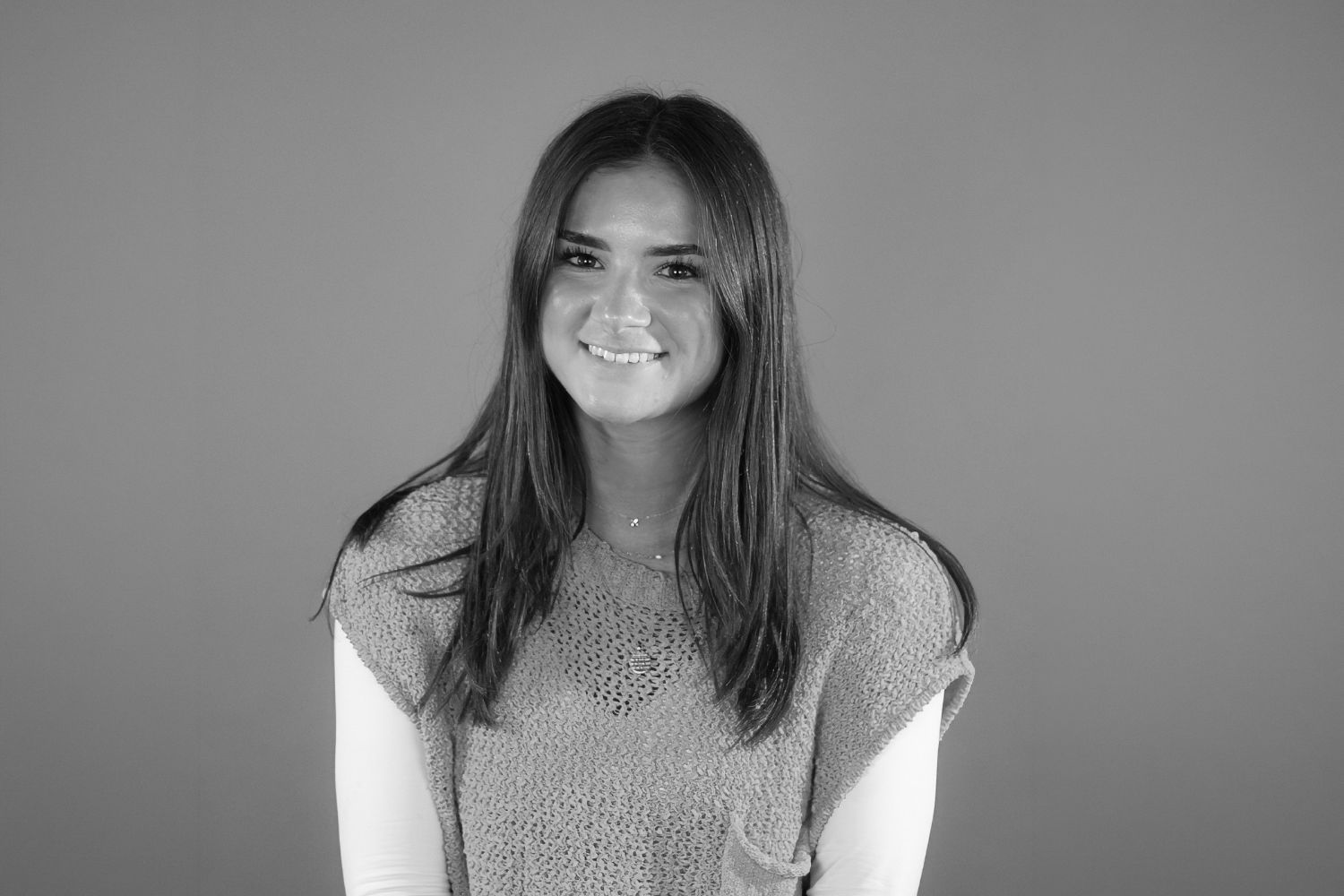
Gig Harbor High School, Gig Harbor, Washington
Every time I visited my grandparents in Sunnyside, Washington, I was reminded that my homogenous hometown was not the norm, but the exception. Sunnyside, shaped by seasons of sun and soil, has a large Hispanic population, and many rely on migrant work to provide for their families. My mother and her large family worked in the fields growing up to make enough money to survive in their small town. My grandmother and her fourteen siblings would live in two- to three-bedroom migrant housing. Her mother sewed the children’s underwear from flour bags. She and her siblings did not go to school past the eighth grade and only attended a few weeks out of the year. My mom was the first person out of her sixty-one cousins to attend college and grew up working in the fields before school every day. Learning about the hardships of my family made me realize how much I was living in two different worlds. My brothers and I have heard these stories growing up and have never been able to imagine what it would be like to live this life. It was because of my mother that this imagination never became a reality.
A memory that has always stayed with me occurred just after I had visited my grandparents. We had taken a picture together and I showed it to my friends when I got back. They saw my grandmother’s tanned skin and deep brown hair and said, “Wow. We didn’t know you were really Mexican”. It came as a shock to me that without the same looks and skin color as my grandmother, I could lose my family heritage in the snap of a finger. Other kids my age might not notice the names on local stores and businesses because they so closely resemble theirs, their parents’, and grandparents’, but when you’re the only mixed-race person in your friend group, and one of the very few Mexican-American families in a place like Gig Harbor, you walk through the city’s streets with a different perspective, keenly aware of the generational challenges that led your family to that particular place. I understood that I needed to find a way to bring my culture to life in a more profound way. It deserved to be carried, to be seen, to be lived.
After realizing that my life here in Gig Harbor did not represent who I was beneath my skin, I decided it was time for self-discovery. If my relatives could create a happy lifestyle for themselves after the hardships they faced, then I could as well through challenges life throws at me. It is the way I can honor all they went through to provide opportunities for me and my future. Through the hard phases in my life, losing friendships that meant so much to me, family members receiving diagnoses, and going through depression, I tried my best to show resilience because that is what my family knew to do. I think about how fortunate I am to plan my future as I see fit, just as my mom did for me and her mother before her. I understand that not everyone has the opportunity to do this. I have learned that to be successful, I must seek mentors who have faced hardships greater than mine, whose definition of success is not limited by their own experiences.
Each generation’s sacrifices and efforts influence the next. Understanding my family’s dedication and hard work has helped me understand myself. Facing challenges with grit and purpose for the future has shaped who I want to become. My family’s past informs my future, and my future gives meaning to their past. Like so many American immigrants before me, I am determined to build a life that reflects both my heritage and the opportunity my relatives fought to give me.
© Maggie. All rights reserved. If you are interested in quoting this story, contact the national team and we can put you in touch with the author’s teacher.