We Are America
Meeting Mid-Journey
By Payton
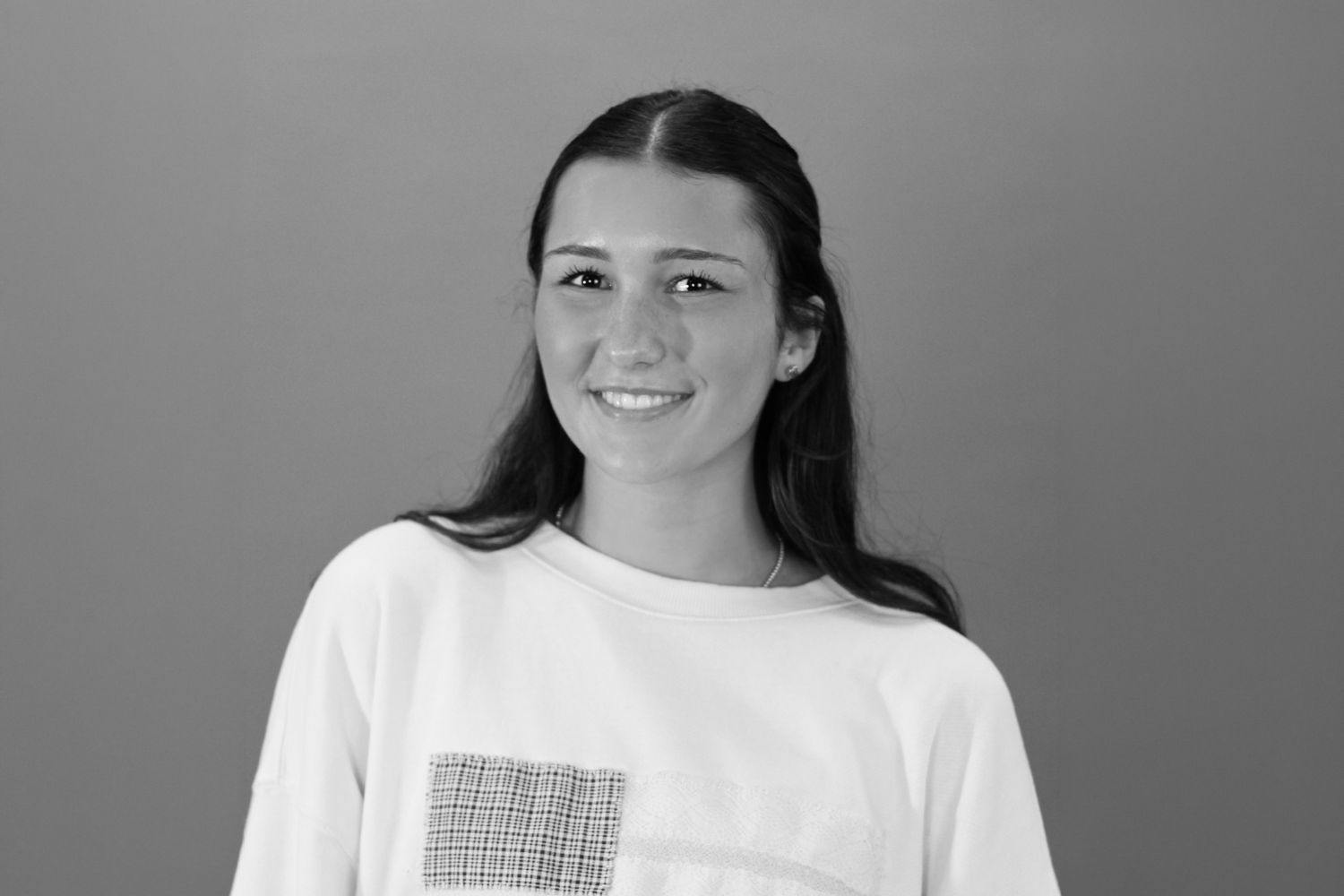
Gig Harbor High School, Gig Harbor, Washington
Before I became a hospital volunteer, my conviction was that hospitals were
places people endured rather than inhabited. I envisioned long corridors humming with urgency, each room filled by a distraught patient. Volunteering in the Inpatient Unit at Mary Bridge Children’s Hospital dismantled that assumption. I learned that hospitals are not sustained by medicine alone, but by small, human acts that provide individual lights on people's worst days. My responsibilities were modest. I scrubbed plastic toys for immunocompromised children, gave wagon rides down hallways for babies without parents, and suited up in full PPE to play Candy Land with patients in isolation. Little of my work involved medicine, yet every task required attention. The work trained me to notice who needed company, who needed distraction, and who needed space.
The place that taught me this most clearly was the Treasure Chest, a basement room stocked with donated toys for pediatric patients. The walk was long, the elevator was suspicious, and many volunteers avoided the trek. I did not. Carrying a Lego set through the hospital felt purposeful, like delivering proof that someone had been thinking about that child. One day, my shift included cradling a baby so a nurse could tend to another patient. Another day, it meant playing for hours with a girl who had broken both legs falling from her window and refusing to return to her seventh-floor room. Every day, I learned that comfort does not announce itself; it waits to be offered. I did not develop this awareness at the hospital. I recognized it there. Growing up, I learned to read rooms before I entered them. I noticed when peers stretched across bus seats, leaving no room for kids like myself. I observed and noted when girls exchanged smirks when I raised my hand, again, in English class. For me, paying attention was never a choice.
Because of that, my instincts did not stay confined to the hospital. They followed me into my photography business, where awareness mattered as much as composition. I started it to offer affordable, inclusive photos in a community where polished images often come with high barriers. I expected my challenge would be technical: balancing ISO and shutter speed, chasing the optimal light. Instead, I was challenged by people. To my clients, the camera was more of a mirror than a tool. They cared less about color balancing or framing than what the image confirmed about them. At first, I internalized dissatisfaction, confusing most peoples’ unspoken priorities. Over time, I learned that what most people wanted was not art, but reassurance. Photography became an exercise in understanding the desire to feel good about oneself, both on the surface and underneath it.
One senior session made the limits of that understanding unmistakable. She arrived with her graduation cap blank, unlike others decorated with college logos. As I photographed her, her smiles felt reluctant. After our shoot, she confided she would not be attending her dream school because her parents’ divorce made it financially impossible. I edited her photos with care, brightening her eyes and warming her skin, but I knew I could not fix what had been broken. Empathy could witness her disappointment, but it could not undo it.
Only then did the pattern fully emerge. At Mary Bridge, I learned to recognize fear, resistance, and silence as signals of stories I could not see. Behind the camera, I saw the same truth sharpened: reactions are rarely born in the moment, they arrived already shaped. In the larger American story, we are constantly meeting one another mid-journey. Our lives are manifestations of the paths our families and ancestors took to arrive here, experiences that precede us and press into the present. Being American, to me, means understanding that no moment stands alone and choosing to meet others with attention rather than assumption, care rather than judgment.
© Payton. All rights reserved. If you are interested in quoting this story, contact the national team and we can put you in touch with the author’s teacher.