We Are America
Purple
By Braela
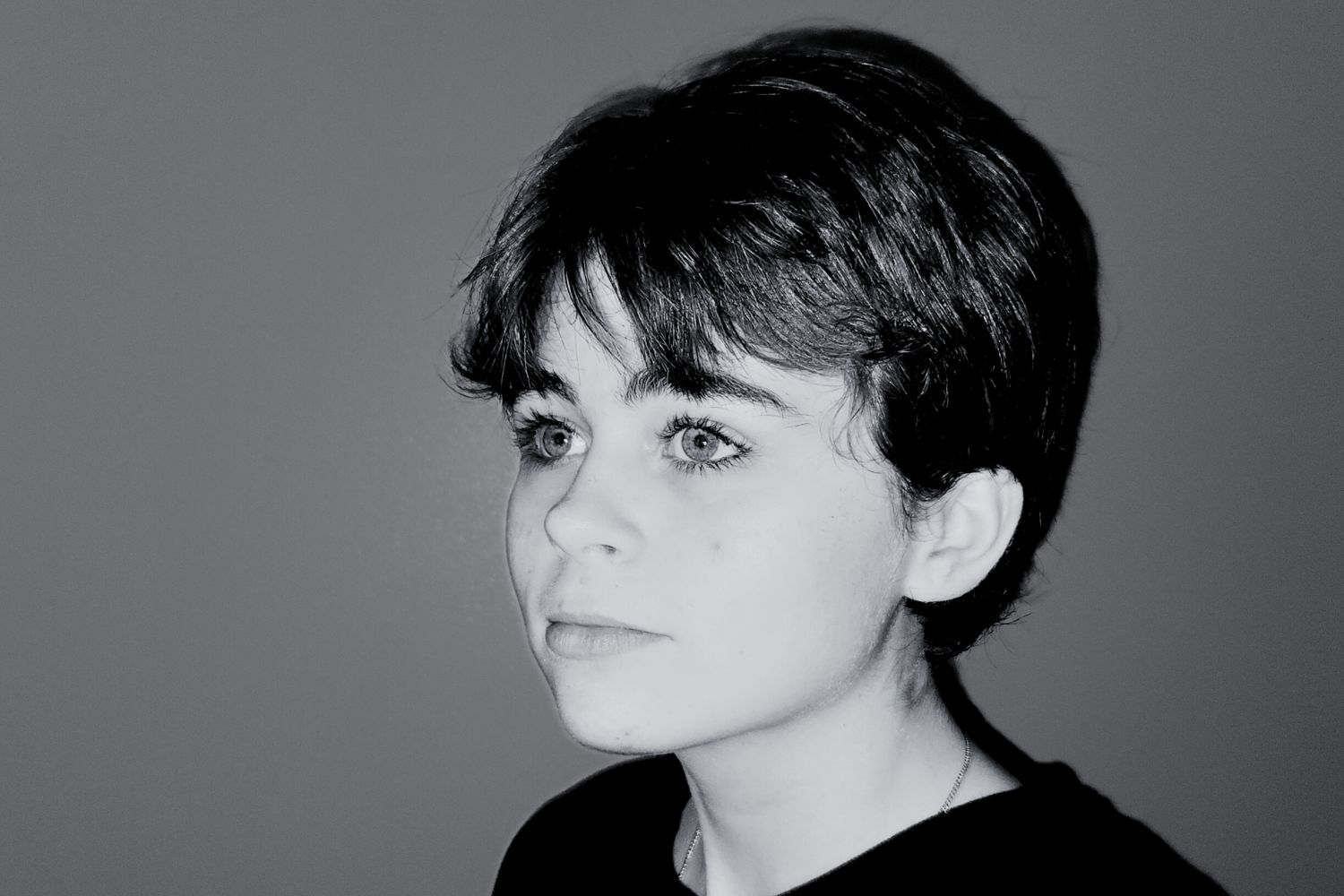
2nd Nature Academy (SNA), Nashua, New Hampshire
I was eight the day I realized that something was amiss in the puzzle pieces that formed my heart, something empty, a hole that had not yet been filled. Picture this. My mom and I are sitting in a booth in the back of a diner. I’m happily swinging my feet back and forth, not a care in the world. Until the server walked over, notepad in hand, ready to take our order. I was beyond excited to tell her that I wanted the Minnie Mouse pancakes with extra syrup. “And what does the little lady want?” she asked. I can vividly remember how I froze, suddenly feeling as if something was very wrong like I was uncomfortably shoved into a small box, feeling claustrophobic. My mom ended up ordering for me that day, and after I got my pancakes, I was happy and carefree once again. But it wasn’t the last time I’d feel that way, suffocated, especially in the upcoming future.
This claustrophobic feeling continued to happen everywhere I went. In grocery stores, standing in the checkout aisle with my dad. In movie theaters, getting popcorn with my brothers. No matter where I went, labels stuck to me like glue. I felt trapped in my own body, forced to mold and bend into the boxes and expectations society had for me. Girls wore pink and played with dolls and had long hair, and boys had short hair and wore blue and played with trucks. But I liked both. I liked short hair and long hair. I liked pink and blue. Really, I was more purple. A blend of the two. But I hated being a girl, and being a boy didn’t feel quite right. But that seemed absurd.
When I turned ten, this feeling just got worse, squeezing and constricting until I finally exploded. I broke down crying, telling my mom how I was feeling. At first, she didn’t understand these feelings I had, but she accepted the fact that I felt them. After that, there was an unspoken understanding between us: I was different. It didn’t help the feeling go away at all, but it was easier knowing that someone else knew and accepted me for it.
At 11, I met someone at a summer camp I went to. They had a flag pinned on their bag with yellow, white, purple, and black stripes. I asked them what it was for, and they told me it meant that they were non-binary. Non-binary? When I asked what that meant, they told me it meant that they were not a boy, nor were they a girl. They were just … them. They then explained to me that they used they/them pronouns and that they had been using them since they were nine to affirm their gender identity. Everything suddenly made sense. That label felt just right, like Goldilocks and her porridge. I went home that day feeling as light as a feather. Something in me had shifted when I got home that day. I sat my mom down, telling her what I had learned. She had nodded her head in support even though she didn’t fully understand. The next day, she got books from the library to help her understand better. For months, I didn’t tell anyone but her about my new-found gender identity. But eventually, I found the courage to open up to my classmates, friends, and some family, confidently asking for them to address me with they/them pronouns.
I’m now … well, out, I guess. Everyone around me knows, and I’m not afraid of sharing it with those I don’t know or those I’ve just met.
© Braela. All rights reserved. If you are interested in quoting this story, contact the national team and we can put you in touch with the author’s teacher.