We Are America
The Beauty of Diversity
By Raeness
Southwest Career and Technical Academy , Las Vegas, Nevada
With bows clipping back my bangs, flaunting the flow of my dress, I took my place in the line for recess. I was young and innocent in kindergarten at the time, with no understanding of how the world works yet. I was there to learn and make friends, and like every other kid, I had a crush. He was standing behind me in line, and I noticed his hand intertwined with another girl. My curiosity drove me to ask him, “Why her?” He then responded with, “Because she doesn’t look like you. Because she’s white.” That was the first time I realized my peers and I were different.
That day, I went home and studied myself in the mirror. My skin's complexion was darker, and my nose's slope was flatter compared to my white peers. I pondered questions that no five-year-old should. Why am I not white? Am I not pretty? My self-esteem began to crumble at the age where I should be worrying about my Barbie dolls. Since then, I wanted to look different. When I came home from school, I spent time rubbing my skin with such force, thinking that my skin was just dirty and that I wasn’t dark-skinned. I became frustrated when the only other color my skin turned was red and not white. For years afterward, my family would make comments about my appearance. “Your skin is so dark,” or “Pinch your nose so it will be sharper when you’re older.” Everything from my facial features to my body became a new insecurity that I never had until pointed out. I hated everything about myself. I hated that I wasn’t white.
I felt embarrassed about my ethnic features, embarrassed that I couldn’t live up to American beauty standards. I was nowhere near beautiful. I would befriend my white peers, constantly feeling envious of them and altering my appearance to look identical to them. My foundation was a lighter shade than me, my lipstick was pink and vibrant, and I begged my mom to let me color my hair light brown or blonde, anything but black. However, it seemed that no matter how hard I tried, I was still not pretty enough. History repeated itself, and I found myself rejected by my middle school crush, who preferred a white peer over me. Why not me? I did everything to change myself to be as beautiful as them, yet I was still just a seed while they were blossoming flowers.
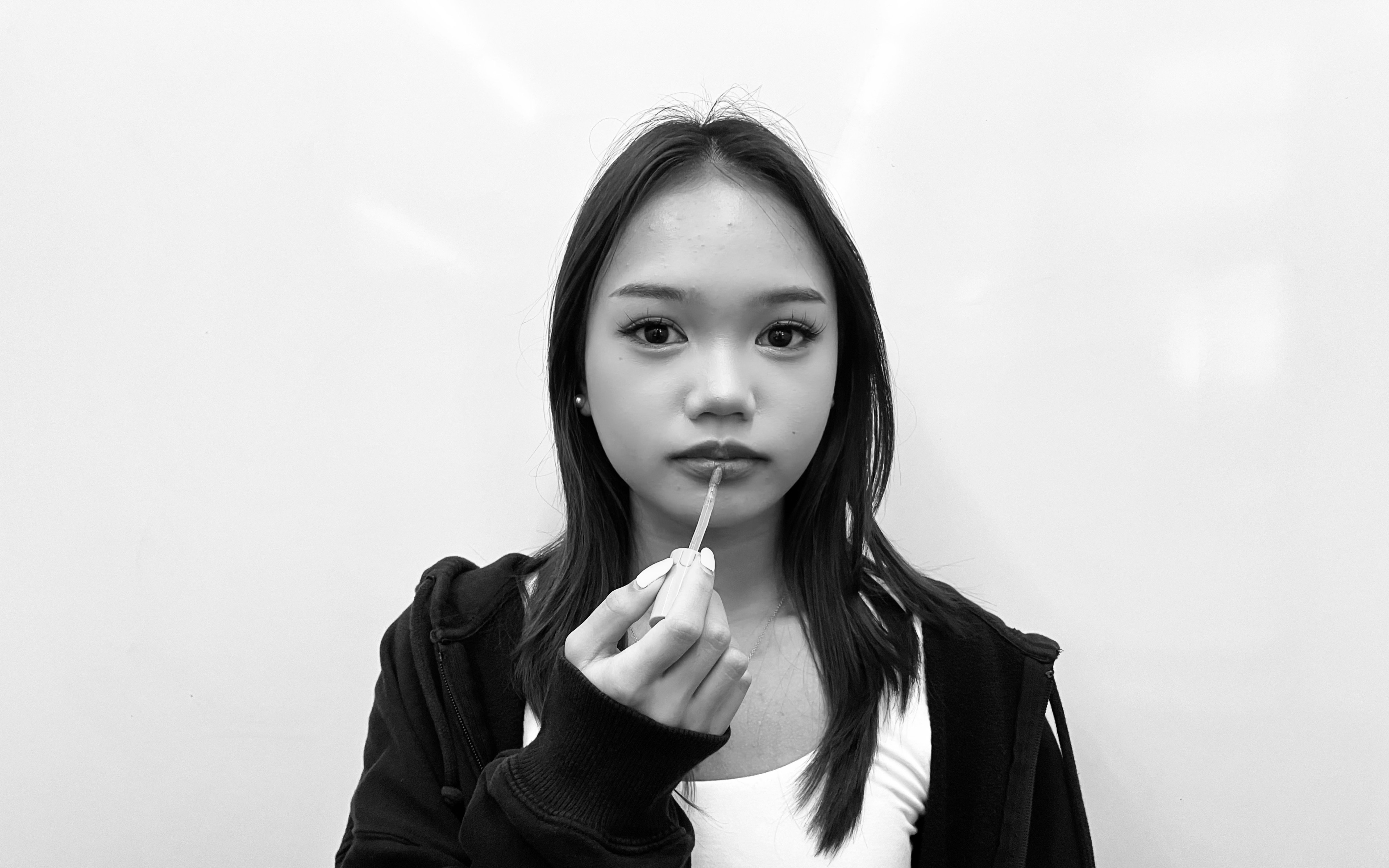
Constantly being surrounded by primarily white peers only fed into my envy. I began to wonder if there was anyone else who looked like me and felt the same way as me. Entering high school, I was welcomed by people of all different backgrounds; I no longer stuck out like a sore thumb but was embraced by diversity. Other girls resembled me: flat noses, darker complexion, dark hair. They were beautiful. After seeing them, I changed my appearance again. My hair returned to black, I matched my foundation shade to my complexion, and I only wore gloss on my two-toned lips. I wholeheartedly embraced my ethnic features and, for the first time in what felt like forever, looked in the mirror with a sense of peace and acceptance.
I may not have lighter skin or a strong nose, but that is the beauty of diversity. Someone else’s beauty does not entirely diminish mine, and that was a lesson learned from years of yearning to be white. The truth is, I was never ugly. I was trying to be someone I’m not. From this turning point in my life, I learned that my features are unique to who I am as a Filipino-American. Beauty is not defined by how applicable one’s features are to America’s beauty standards. It is defined by how one embraces one's natural beauty with confidence and acceptance. I have a long way to go in my self-love journey, but finally feeling comfortable with my features was a huge step from the starting line.
© Raeness. All rights reserved. If you are interested in quoting this story, contact the national team and we can put you in touch with the author’s teacher.