We Are America
The Letters are at War
By Lizzy
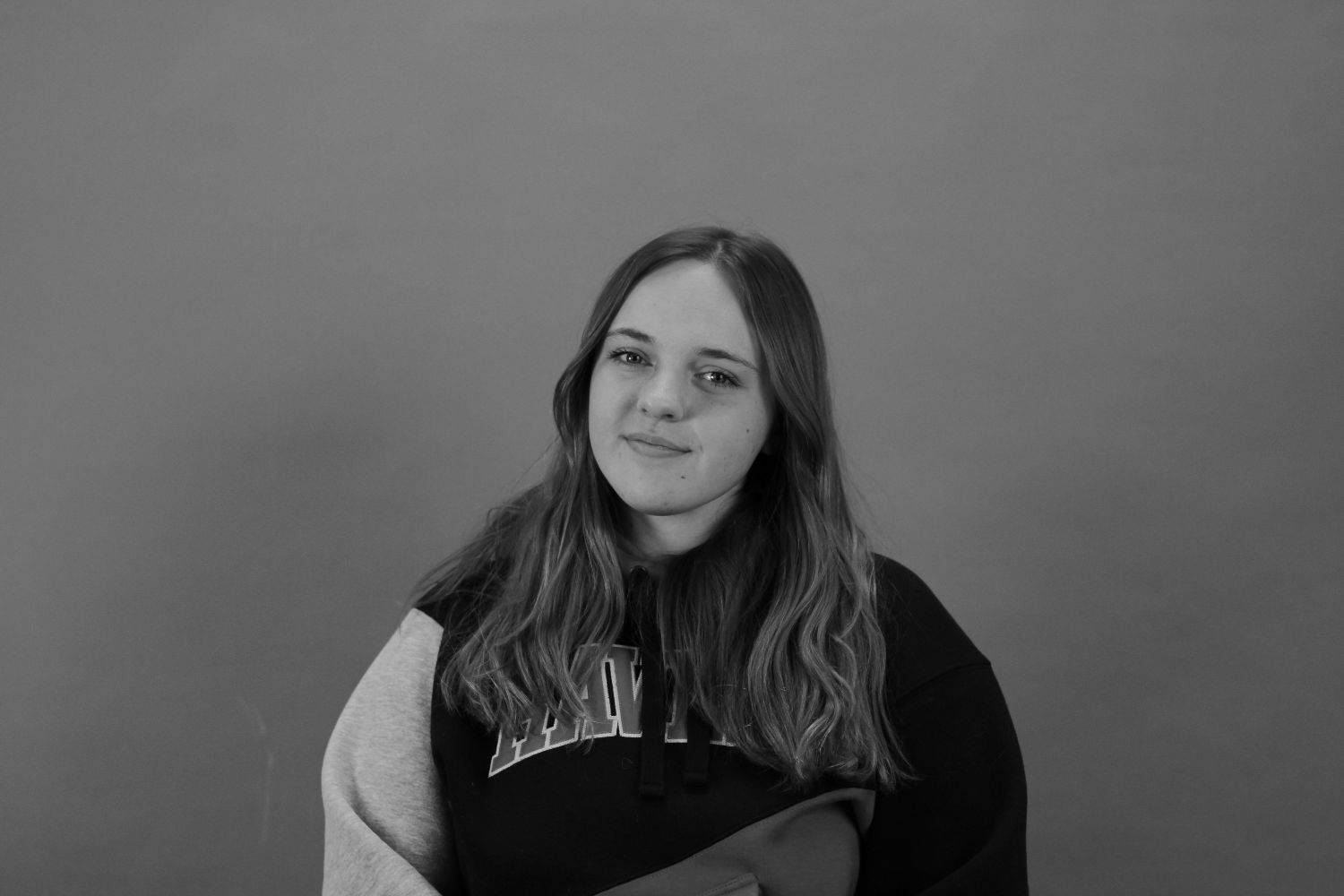
Gig Harbor High School, Gig Harbor, Washington
“The letters are at war in my mind.” That’s what I tell my teachers and my family. When I try to read, the letters twist, trade places, and blur at the edges. Sometimes they march the wrong way; other times they scatter like startled birds. Reading isn’t simple, it's a battle to pin the words down long enough to understand.
The smell of pencil shavings filled the classroom, sharp and metallic, mixing with the dusty warmth of old textbooks. My fingers tingled from gripping my pencil too tightly. When I write, I can feel the lead snap beneath my fingers, a tiny crack that feels louder than it should. Writing felt intimidating back then I constantly had to ask how to spell even simple words, and embarrassment crept up my neck every time. The paper’s rough edges scraped under my fingertips, and whenever I tried to read what I had written, the letters spun until my head did too. Back then, writing felt like trying to hold water in my hands every sentence slipped through my fingers. Everyone else seemed to glide across the page while I stumbled and stopped.
I believed something was wrong with me, not with my brain, but with me. I was smart in every subject except English. My family couldn’t understand it, especially because I spoke fluently with my brother. But I wasn’t reading; I was memorizing. When the adults realized this, I was held back a grade, but the extra time didn’t come with extra help. I was pulled out to “practice reading,” yet nothing changed. I stayed stuck while everyone else moved forward.
Middle school wasn’t much better. I had a class period where I sat doing almost nothing. When I asked for help, the teacher did the work for me. It looked like support, but it wasn’t. It was like someone tying your shoes every day you never learn to run.
Then COVID hit in sixth grade, and everything went online. I’m terrible with online learning; I need real voices, real people. Most days, I slept or watched shows instead of logging in. My learning froze completely.
By the time I entered high school, I still didn’t know how to manage my dysgraphia. My mindset was: Why do it myself when someone else will? It was all I had ever been taught.
Everything changed the second semester of freshman year when I transferred to a private school. I walked into their support class expecting the same old routine. But when I asked for help on an essay, the teacher explained the prompt and then said the four words that changed everything: “Okay. Now do it.”
It felt like being pushed into deep water but I didn’t drown. I wrote. Slowly, shakily, imperfectly, but I wrote. For the first time, the work was mine. That moment became a mirror, showing me a version of myself I had never seen: capable.
Learning to work with my dysgraphia felt like learning to read a map in another language. Difficult but freeing. The teachers didn’t carry me—they guided me. They became the compass pointing me toward independence. Slowly, dysgraphia stopped feeling like an anchor and started feeling like a part of my story.
Then came the news: I had to leave that school. It felt like someone ripped a page out of my life. I cried for days. I loved that place the teachers, the friends, the feeling of finally moving forward.
The new school felt cold and unfamiliar. I texted my old friends constantly about how much I hated it. But eventually, people came into my life who made everything easier. I moved out of the class that replaced effort with hand-holding, and I carried the lessons I’d learned with me.
Now, English is my strongest subject. I earn A’s on essays. I read for fun. I write because I love it.
To me, being American means rewriting your story even when the world hands you the wrong script. It means fighting for your voice even when the letters try to run away.
© Lizzy. All rights reserved. If you are interested in quoting this story, contact the national team and we can put you in touch with the author’s teacher.