We Are America
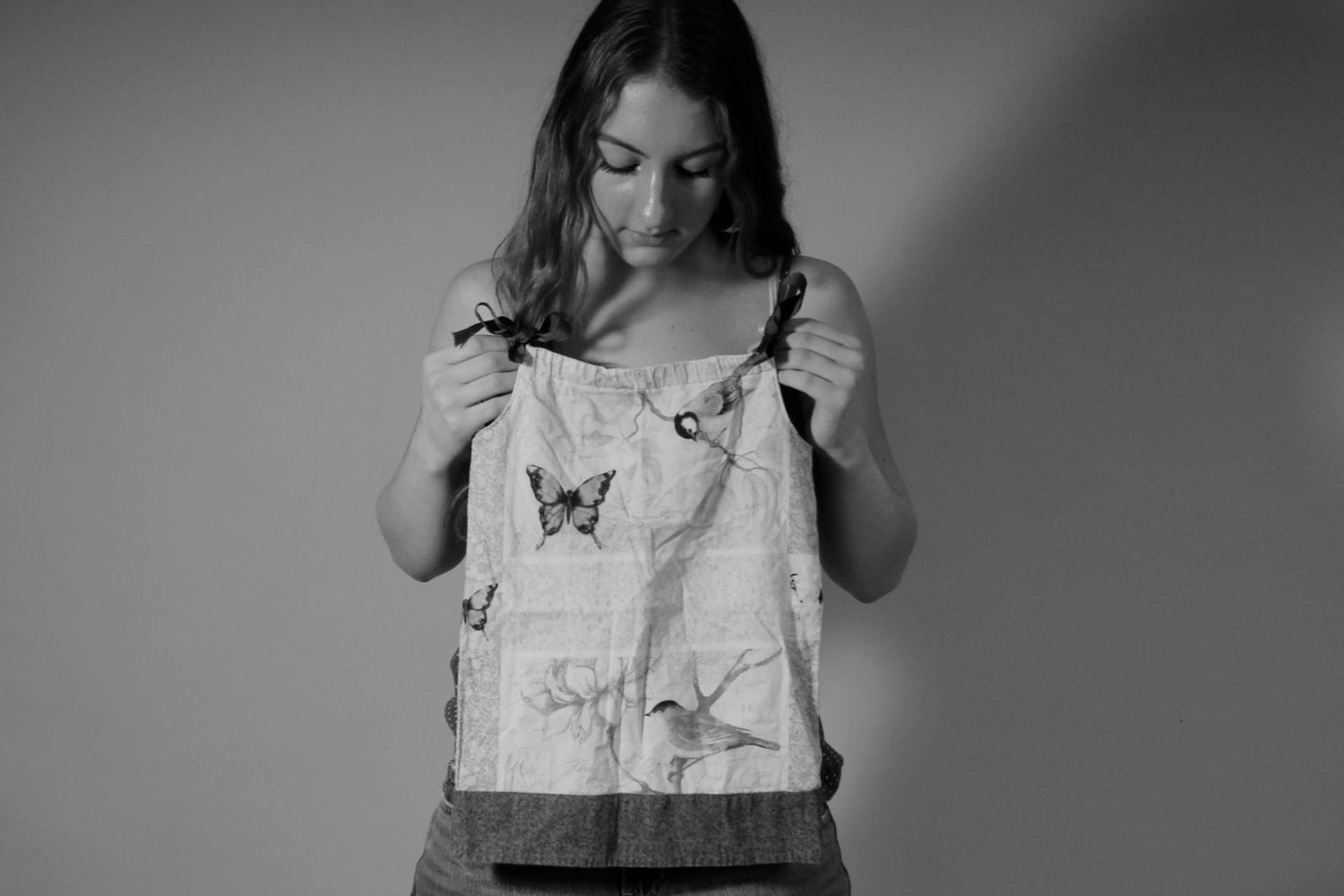
Watercolor Birds
By Katie
Appomattox Regional Governor's School for the Arts and Technology, Petersburg, Virginia
When I first grew old enough to pick out my outfits, my fashion sense could be described as different. I often wore striped tights under patterned shorts, colorful socks over starry leggings, or even a dress and a skirt at the same time. My favorite thing to wear, though, was a dress my mom made for me.
She could sew anything. One day, she brought home some fabric and sewed it into a sundress of light green cloth covered in watercolor birds with an olive green band around the bottom hem that matched the two ribbon shoulder straps. It hung loose and baggy around my small body—perfect for being a little girl in the summer. It felt limitless, enabling, free. It meant nothing that it fit me shapelessly, the neckline high up on my collarbone.
For my first few years of life, I had no worries about my public appearance and no need to be attractive. But when the pandemic cut my fifth-grade year short, I didn’t go back to school in person until seventh grade, and on the first day, I had an embarrassing realization: while we passed our sixth grade from home, all my female classmates grew up and bought more mature clothes, but here I was, still wearing the same style I had worn in fifth grade: childish colors and shapeless clothes. It felt like I was maturing at a slower rate than everyone else.
I walked through school that day embarrassed to be seen. The second I got home, I asked my mom to buy me new clothes but received the answer that I would hear many times over the next several years: “But you don’t need new clothes.”
She was right; I was fortunate to have plenty of clothing. But that didn’t stop me from feeling frustrated when I ended up in one of the same few bad outfits I always wore. This struggle continued through 10th grade until I finally got a job and had money of my own. My whole first paycheck went toward shirts, pants, and everything else I had wanted for years.
“It’s your money,” my mom said as I wavered between two pairs of jeans. I gleefully decided to get both.
The next day of 10th grade after that shopping trip, I wore a flattering new tank top and jeans. I walked into class with a confidence that I couldn’t remember having since I was that little girl in the bird dress. But when I got home from school and changed into my pajamas, the confidence came off with the outfit. I looked into my dull eyes in the mirror and realized something: no outfit would ever replicate the carefreeness of childhood. It wasn’t the bird dress that set me free; it was that magical not-caring of being little.
That evening, my mom and I sat at her sewing machine at the kitchen table, mending a new navy dress I had just bought to make it fit me right. I thought of when she first made that bird dress, us sitting in these same seats, her carefully feeding the fabric under the needle and me beside her wishing she’d make the machine go faster so I could wear it already. I could practically hear the thoughts she was having as she worked on my navy dress; I’d asked her to make it fit closer to my body so I’d look more grown-up, and though she was reluctant to make her little girl look even older, she sewed with the utmost care. She was missing the bird dress, too. We both wanted back little Katie’s easy dancing, running, and laughing, eyes bright as the sun and body free as those watercolor birds.
© Katie. All rights reserved. If you are interested in quoting this story, contact the national team and we can put you in touch with the author’s teacher.